
Impact investing surges eightfold + COP30 and COP31 + $6 billion in new impact commitments

Tracking impact and market momentum
This month has marked a major milestone for impact investing in Australia.
We’re proud to release Benchmarking Impact: Australian Impact Investor Insights, Activity and Performance 2025 – the most comprehensive study of the local market in five years. Produced in partnership with the UNSW Centre for Social Impact, our report reveals that Australia’s impact investing market has grown nearly eightfold since 2020, demonstrating that not only is the market expanding, but the majority of investors surveyed are also achieving their expected financial and impact returns. This growth signals increasing maturity, sophistication and momentum across the sector.
Also in this newsletter, we share insights from the investor roundtables we hosted as part of the global COP30 capital mobilisation roadmap. We share an update from our Impact Deal Tracker, which has captured over $6 billion in recent impact investing commitments, along with international research and reports on government action, impact trends and blended finance.
Thank you for your continued support and commitment to building a strong, transparent and outcomes-focused impact investing market in Australia – which you’ll learn more about in our Benchmarking Impact Report!
Best wishes,
David
David Hetherington, CEO
Impact Investing Australia
Impact investing surges eightfold
Our latest research has revealed more than $157 billion is now invested in Australia’s impact investing market – a nearly eightfold increase since 2020. The Benchmarking Impact: Australian Impact Investor Insights, Activity and Performance Report 2025 was developed following a survey of active and prospective investors managing more than $345 billion in assets and an analysis of 197 publicly available impact investment products.
Published in partnership with UNSW Centre for Social Impact, this is the most comprehensive analysis of the Australian impact investing market in five years. Key findings of our research include:
Growth in impact investments
- Public impact products: grown from $20 billion in 2020 to $157 billion in 2025
- Green, Social and Sustainability (GSS) bonds: grown from $17 billion to $145 billion, now comprising the largest share of the market
- Publicly available impact products: grown by 77%
Performance
- 80% of investors surveyed said financial returns met or exceeded expectations
- 84% reported the same for social and environmental outcomes
Opportunities
- Need for Impact Measurement and Management (IMM) consistency: 85% of investors track impact, yet few use the same measurement framework
- Interest in blended finance is high, but appetite for investing in emerging markets is limited
- Nearly 90% believe the Australian Government could play a stronger role in stimulating growth in the market
In the media: Our report in a snapshot
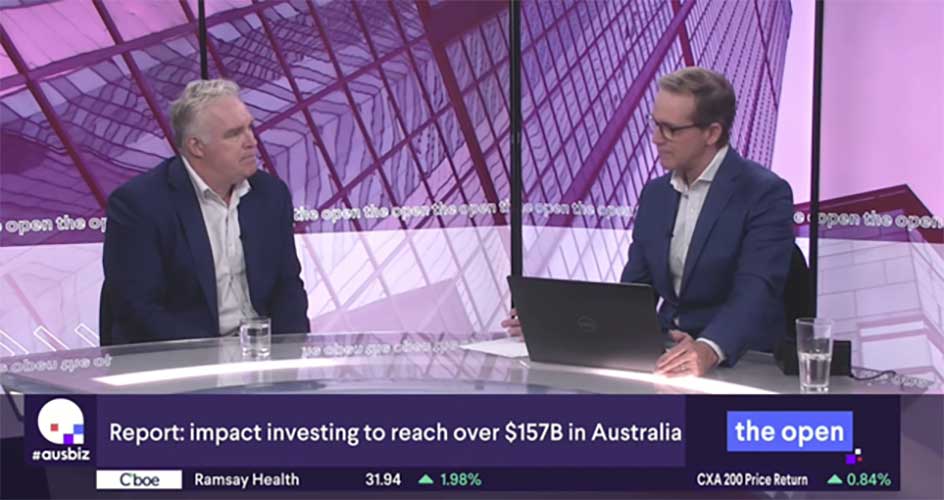
Our Benchmarking Impact Report has garnered strong media interest. This includes coverage in The Guardian and an interview with ausbiz – where David discussed the research findings and key impact investing opportunities, in areas such as affordable housing, renewables and regenerative agriculture. He also spoke of the need for consistent impact measurement standards.
The coverage provides a great snapshot of the report.
Read the The Guardian story here andwatch David’s interview with ausbiz here
Read the full Benchmarking Impact Report here
COP30: Mobilising private capital for climate and nature
As part of the global COP30 Roadmap for Private Capital Mobilisation initiative led by GSG Impact and the PRI, we hosted two exclusive investor roundtables, in partnership with the Principles for Responsible Investment (PRI) and The University of Melbourne. The sessions convened more than 60 senior institutional leaders in Australia to develop Insights and recommendations for inclusion in the final report presented to the Brazilian and COP30 Presidencies at the PRI in Person meeting and COP30 Heads of State Summit earlier this month. The key topics discussed were climate adaptation and resilience, just transition planning and nature-based solutions (NBS).
Key takeaways from the roundtables were:
Climate adaptation and resilience
- Growing investor focus: 84% of participants are factoring climate resilience into decisions, but data gaps, short horizons and weak valuation frameworks limit confidence and capital flow.
- Challenges in pricing adaptation: Difficulty modelling counterfactuals, long-term benefits and supply-chain risks makes it hard to justify adaptation investments under current discounting and benchmarking norms.
- Emerging opportunities: Asset-level data, dual-purpose infrastructure, sustainable agriculture and better use of insurance sector insights can demonstrate measurable resilience returns.
- Investment enablers: Scalable mechanisms, blended finance, government incentives, public risk-sharing, taxonomies and clearer mandates are essential to unlock adaptation investment at scale.
Just transition and nature-based solutions
- Increasing momentum: 57% of investors are considering NBS or just transition factors, with strongest interest in agriculture, land-use transitions, reforestation and fossil-fuel asset repurposing, yet data, governance and integrity gaps constrain investment.
- Current challenges: Lack of global standards, variable credit integrity and risks of double counting undermine comparability and confidence in NBS and transition-related markets.
- Emerging opportunities: Australia’s NBS projects are internationally recognised for financial and social value, including Indigenous-led and regional models that support local jobs and equitable outcomes, with potential for APAC leadership.
- Investment enablers: Harmonised regulation, clearer disclosure standards, demand-side strategies, blended finance, corporate co-investment and First Nations leadership are key to attracting private capital and reducing greenwashing risks.
COP31
While Türkiye will host COP31 in Antalya in November 2026 (handling the formal presidency of the conference), Australia will hold the COP presidency for negotiations, ensuring that Australia and the Pacific remain central to shaping the global climate agenda. We look forward to working with our partners and contributing to the discussions that will further catalyse climate action.
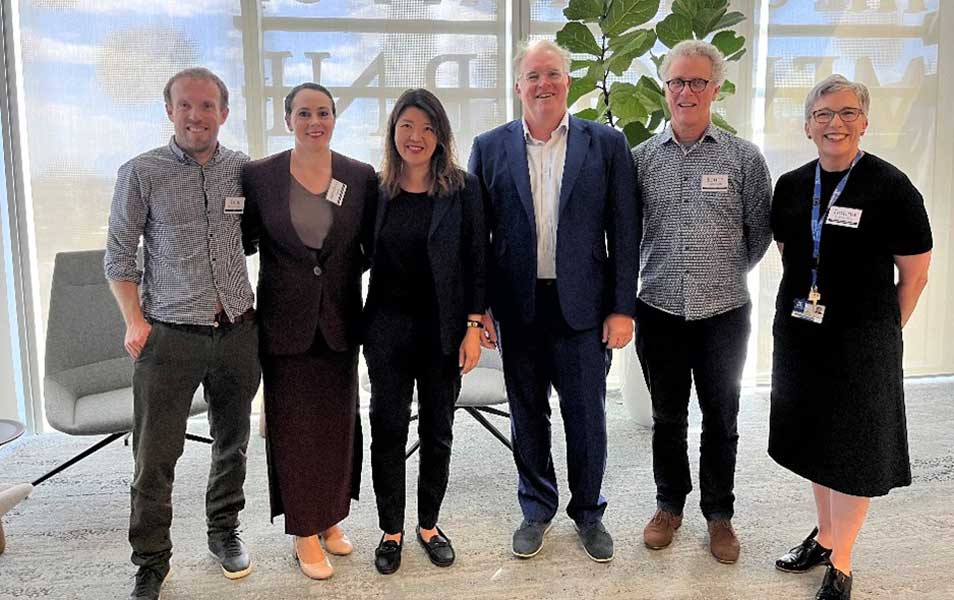
Pictured at the Melbourne investor roundtable: Tom Wainwright (PRI), Michelle Di Fabio (FGII, IIA), Kar Mei Tang (PRI), David Hetherington (IIA), Bruce Campbell (IIA), Donna Loveridge (University of Melbourne)
$6 billion+ added to our Impact Deal Tracker
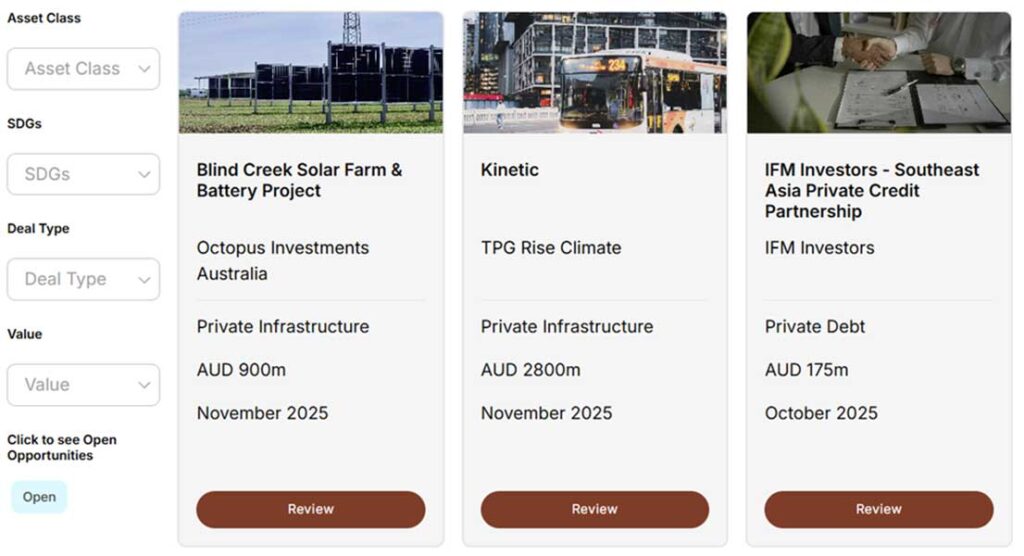
Our Impact Deal Tracker now reflects more than $6 billion in new impact commitments captured since September. With 100+ confirmed Australian impact investments, it equips institutional investors, foundations, government agencies and capital providers with a clear view of opportunities spanning sectors, asset classes and impact priorities.
The most recent commitments include:
- Blind Creek Solar Farm and Battery Project – investments by Octopus Investments Australia, Hostplus, REST Super, Clean Energy Finance Corporation and Westpac
- Kinetic (Australasia’s largest mass-transit operator) – an equity investment by TPG’s Rise Climate fund
- Southeast Asia Private Credit Partnership – with IFM Investors and the Australian Government (via Export Finance Australia)
- Uluu (a Western Australian start-up developing a seaweed-derived material to replace conventional plastics) – investments by Burda Principal Investments, Main Sequence, Startmate, Fairground and Trinity Ventures
From affordable housing and clean energy to Indigenous enterprise, health, aged care and sustainable agriculture, the Tracker delivers up-to-date insights across a wide spectrum of impact sectors, supported by an easy-to-use interface and advanced filtering features.
Submit an impact investing commitment for inclusion in the Tracker via email: Deals@impactinvestingaustralia.com
Governments hold the key to building impact economies
Our most recent story for OnImpact featured the GSG Impact’s new report, Towards Impact Economies: Aligning government action and private capital for public good. The report sets out a practical roadmap for governments to bridge financing gaps and deliver on national priorities by embedding social and environmental impact into every economic decision.
It argues that governments are uniquely placed to unlock the trillions of dollars in private capital needed to tackle social and environmental challenges. By rethinking how they spend, regulate and build markets, policymakers can help drive impact economies.
International news
Global impact investing grows, but capital deployment slows
The Global Impact Investing Network (GIIN) has released its latest State of the Market report, revealing continued growth in the global impact investing sector despite economic and political uncertainty. In 2024, 429 organisations, including fund managers, advisors and limited partners, reported managing US$448 billion in impact assets – up 21% annually since 2019. However, the amount of capital deployed fell 30% from 2023, reaching $49.8 billion – 18% below what investors had projected.
According to the GIIN report, deal activity is anticipated to rise to US$58.6 billion in 2025, with demand in areas like climate, health and agriculture expected to drive investment.
Despite the challenges (such as ‘impact washing’ and growing scrutiny of ESG practices), sentiment remains positive. 72% of investors were satisfied with financial returns, and 90% reported satisfaction with the impact their portfolios are achieving.
Blended finance in the Netherlands, Europe and Emerging Markets
Our GSG Impact National Partner colleagues at the Netherlands Advisory Board on impact investing have released a new report examining how blended finance is being implemented in practice – across different sectors, fund types and geographies. Drawing from 21 real-world examples across the Netherlands, Europe and Emerging Markets, key findings in the report include:
✅ Blended finance is not one-size-fits-all
✅ Structuring is a negotiation process
✅ Catalytic capital must align with impact objectives & stay accountable
The research provides practical insights to guide the design of future blended finance vehicles and equip practitioners & policymakers with a blueprint to mobilise private capital at scale in service of the SDGs.